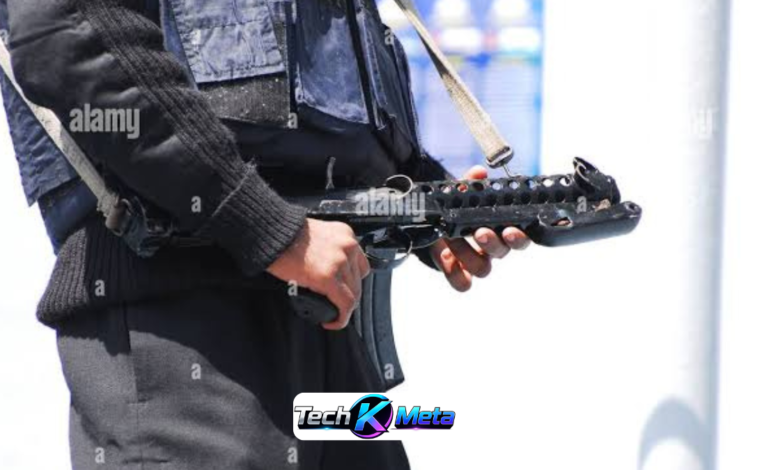
The Sterling Submachine Gun is one of the most iconic British firearms ever developed, earning a reputation for reliability, durability and practical performance. Introduced during the post-war period, it replaced the ageing Sten Gun and quickly became a trusted weapon for the British Armed Forces. Its compact construction and dependable operation made it suitable for a wide range of military roles, from infantry patrols to special operations.
Over several decades, the Sterling Submachine Gun served not only in the United Kingdom but also with military and police forces across the world. Its thoughtful engineering, impressive accuracy and ease of maintenance ensured a long service life. Even today, it remains a favourite subject among military historians, firearm collectors and enthusiasts who appreciate its lasting influence on modern small arms.
History of the Sterling Submachine Gun
The story of the Sterling Submachine Gun began after the Second World War, when Britain sought a more advanced replacement for the Sten Gun. Although the Sten had proven valuable during wartime because of its simple construction, it suffered from reliability concerns and outdated design features. Sterling Armaments Company responded by developing a stronger, safer and more dependable firearm that addressed these shortcomings.
After years of testing and refinement, the weapon entered service with the British Army during the 1950s. It quickly demonstrated outstanding performance under demanding conditions and became standard issue for many military units. Its success also attracted international attention, leading to widespread exports and long-term service in numerous countries throughout the Cold War and beyond.
Design and Engineering
The design of the Sterling Submachine Gun reflected Britain’s commitment to creating a practical and highly reliable military weapon. It employed a simple blowback operating mechanism that reduced mechanical complexity while ensuring dependable cycling. The folding metal stock made it compact enough for vehicle crews, airborne troops and special forces without sacrificing stability during firing.
One of the weapon’s greatest engineering achievements was its distinctive curved magazine. Unlike the magazines used by many earlier submachine guns, it fed cartridges more smoothly and significantly reduced the likelihood of stoppages. Combined with excellent balance, comfortable controls and robust construction, the firearm proved easy to operate even during prolonged military engagements in difficult environments.
Sterling Submachine Gun Specifications
The Sterling fired the widely available 9×19mm Parabellum cartridge, a calibre used by many NATO countries. It offered a practical barrel length, moderate weight and an effective firing range suited to close-quarters combat. These characteristics allowed soldiers to carry the weapon comfortably while maintaining excellent mobility during urban operations, reconnaissance missions and defensive positions.
Another notable feature was its controlled rate of automatic fire, which helped improve accuracy while reducing ammunition waste. Soldiers valued the firearm for its manageable recoil and straightforward field maintenance. These technical qualities contributed greatly to its outstanding reputation and helped establish it as one of Britain’s most respected military firearms during the twentieth century.
Variants of the Sterling Submachine Gun
Several versions of the Sterling were introduced throughout its production history to meet changing military requirements. Early development models gradually evolved into the well-known L2A3, which became the standard service weapon for British forces. Continuous improvements focused on enhancing durability, simplifying manufacturing and maintaining the weapon’s already excellent reliability.
A particularly famous variant was the L34A1, a suppressed model developed for covert military operations. Equipped with an integral sound suppressor, it proved highly effective for special forces conducting reconnaissance and discreet missions. Export models and civilian semi-automatic versions further expanded the firearm’s popularity, making it recognised far beyond British military service.
Military Service and Global Use
The Sterling Submachine Gun served with distinction in the British Army, Royal Marines, Royal Air Force and elite units including the Special Air Service. Its compact dimensions and dependable operation made it especially valuable for vehicle crews, airborne forces and soldiers engaged in close-quarter combat where speed and manoeuvrability were essential.
Outside the United Kingdom, many countries adopted the weapon for military and police service. It performed reliably in deserts, jungles and cold climates alike, demonstrating remarkable versatility. Although later replaced in many frontline roles by modern assault rifles, the Sterling continued serving in reserve units and security organisations because of its proven dependability.
Performance and Battlefield Reputation
The Sterling gained widespread praise for performing consistently under harsh battlefield conditions. Soldiers appreciated its ability to continue operating despite exposure to mud, dust and adverse weather. This level of reliability increased confidence during combat and helped establish the weapon as one of the finest submachine guns ever produced by Britain.
Its balanced handling also made it easier to control during automatic fire compared with many competing designs. The combination of dependable feeding, practical accuracy and robust engineering allowed the firearm to remain effective throughout decades of military service. These strengths ensured that the Sterling earned lasting respect among professional soldiers and firearms experts alike.
Sterling Submachine Gun vs Sten Gun
Comparisons between the Sterling and the Sten clearly demonstrate the significant advances made in British firearm engineering. While the Sten fulfilled an important wartime role because of its inexpensive production, it lacked refinement and frequently experienced magazine-related reliability issues. The Sterling addressed these weaknesses with improved materials, stronger construction and a far more dependable feeding system.
The newer weapon also offered better ergonomics, enhanced safety features and greater shooting comfort. Its folding stock, superior balance and improved accuracy gave soldiers greater confidence during combat. These improvements explain why the Sterling successfully replaced the Sten and remained in active military service for many years.
Legacy and Popular Culture
Beyond its military achievements, the Sterling became widely recognised through its appearances in films, television productions and documentaries. One of its most famous cultural connections is its use as the basis for the E-11 blaster carried by Imperial Stormtroopers in the original Star Wars films. This unique link introduced the firearm to audiences around the world.
Today, original examples are displayed in museums and carefully preserved within private collections. Historians continue studying its innovative design, while collectors admire its craftsmanship and military significance. The Sterling’s lasting influence demonstrates how thoughtful engineering can create a weapon that remains respected long after its frontline service has ended.
Conclusion
The Sterling Submachine Gun remains one of Britain’s most successful military firearms because it combined dependable engineering, practical performance and long-term reliability. Designed to replace the Sten Gun, it exceeded expectations by serving British and international forces for decades. Its innovative magazine, compact design and ease of maintenance ensured exceptional battlefield performance under a wide range of conditions.
Although modern assault rifles have replaced it in frontline service, the Sterling Submachine Gun continues to hold an important place in military history. Its impressive legacy, technical innovations and influence on popular culture guarantee that it will remain an enduring symbol of British firearms engineering for generations to come.
Frequently Asked Questions
What is the Sterling Submachine Gun?
The Sterling Submachine Gun is a British-designed 9mm firearm developed after the Second World War to replace the Sten Gun. It became one of the most reliable military submachine guns of its era.
Why did the British Army adopt the Sterling?
The British Army adopted the Sterling because it offered greater reliability, improved safety, better accuracy and a stronger magazine design than the earlier Sten Gun.
What calibre does the Sterling use?
The Sterling is chambered for the widely used 9×19mm Parabellum cartridge, making it compatible with standard NATO ammunition.
What is the most famous version of the Sterling?
The L2A3 is the best-known military model, while the L34A1 suppressed version became popular with special forces conducting covert operations.
Is the Sterling Submachine Gun still in service?
Although it is no longer a standard frontline weapon, some examples remain in museums, private collections and limited ceremonial or reserve use in certain countries.
Also Read: larkhall bath